
Home

ICARUS PROJECT
ICARUS PROJECT

Research Partners

The Summary Of Project

The ICARUS project seeks to address these issues by exploring geophysical methodologies—non-invasive techniques that can enhance structural diagnostics when combined with semi-destructive, destructive, and conventional non-destructive tests (NDTs). ICARUS adopts an innovative multiscale and multisensory methodology to better understand the relationship between geophysical and mechanical properties under various deterioration conditions. 

The project aims to develop: 

  • Empirical relationships between geophysical data and mechanical degradation. 
  • Improved bond-slip and tension-stiffening laws to model the effects of corrosion on steel-to-concrete interaction. 
  • Enhanced finite element models (FEM) to simulate deteriorated RCS behaviour more accurately. 

 Best Expected Results from ICARUS: 

  • Development of a robust, integrated diagnostic protocol for deteriorated RCS using geophysical, NDT, and DT methods. 
  • Empirical models that correlate geophysical measurements with mechanical deterioration—offering predictive insights into structural health. 
  • Improved FEM-based structural assessment tools, incorporating real-time deterioration data. 
  • Advanced understanding of corrosion effects on steel-to-concrete interaction at both local and global levels. 
  • Non-invasive tools for estimating current and future performance of aging concrete structures. 
  • New standards and methodologies that can influence safety regulations and infrastructure policy 

ABOUT US :

Our ICARUS research group is structured into two complementary operational units, working together to study and monitor the degradation of reinforced concrete elements and to develop effective strategies for their preservation. 

The CNR Research Unit, coordinated by Luigi Capozzoli, focuses on integrating geophysical methods for the diagnosis and monitoring of structural deterioration. Thanks to the expertise of Emilia Vasanelli (ISPC-CNR) and Luciano Telesca (IMAA-CNR), the unit employs both destructive and non-destructive testing, geophysical imaging techniques, and advanced statistical analysis. Activities are supported by laboratory and field instrumentation, with the involvement of two young researchers, Giuseppe Salvia and Davide Di Gennaro. 

The UNICUSANO Research Unit, led by Francesca Nerilli, develops analytical and numerical models to assess the mechanical behavior of damaged concrete elements. The experience of Stefania Imperatore in evaluating corroded structures plays a key role in the project. The unit also carries out experimental testing on degraded elements and applies predictive models, supported by a young researcher, Cristina Monteleone. 

  • Dott.Luigi Capozzoli
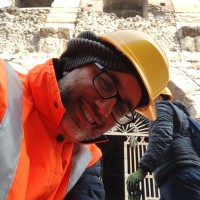
    Dr. Luigi Capozzoli (Teggiano, Italy, 1984) is researcher at the Institute of Methodologies for Environmental Analysis (IMAA) since 2020. He holds a degree in Civil Engineering, with a thesis on non-destructive techniques for the assessment of architectural heritage safety. He later obtained a Ph.D. in Environmental Engineering from the University of Basilicata (Italy).

  • Professor Francesca Nerilli

    Associate Professor at Università Telematica Niccolò Cusano in Rome specializing in the scientific-disciplinary sector ICAR/08 – Structural Mechanics.
    She teaches several courses in the field of structural mechanics, including:
    • Fundamentals of Structural Mechanics
    • Structural Mechanics
    • Basics of Mechanics of Solids and Structures for Mechanical Engineering
    • Mechanics of Solids and Structures
    Her  research is mainly focused on:
    • Masonry structures
    • Nonlinear analysis
    • Advanced computational methods in structural engineering
    Her scientific work includes research on:
    • Composite materials
    • Constitutive laws for fiber-reinforced concrete structures
    Some of her published research can be found on platforms like

LATEST NEWS
CACRS conference 30 June to 3 July

“The research team will present the initial results of the activities carried out within the ICARUS project at the CACRS conference, which will be held in Lecco from June 30 to July 3. Here, corrosion phenomena occurring in RC structures will be discussed on an international level with  experts coming  from all over the world”

Link alla Brochure DOWNLOAD
We’re excited to announce that ICARUS will be at IWAGPR 2025 in Thessaloniki!

IWAGPR is the most important European conference for Ground Penetrating Radar (GPR) experts, and this year’s edition will take place from 01 to 04 July 2025 in Thessaloniki, Greece.

We look forward to sharing our latest research, connecting with fellow professionals, and advancing the field of GPR together. See you there!

Get in Touch