Dott.Luigi Capozzoli
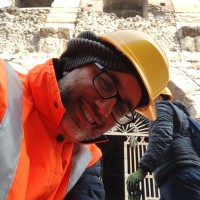
Dr. Luigi Capozzoli (Teggiano, Italy, 1984) is researcher at the Institute of Methodologies for Environmental Analysis (IMAA) since 2020. He holds a degree in Civil Engineering, with a thesis on non-destructive techniques for the assessment of architectural heritage safety. He later obtained a Ph.D. in Environmental Engineering from the University of Basilicata (Italy).
Since 2015, he has been responsible for the Hydrogeosite Laboratory at CNR-IMAA, where he applies geophysical methods to characterize and monitor engineering, archaeological, and environmental challenges. His research focuses particularly on improving the effectiveness of electrical and electromagnetic techniques in complex and unfavorable contexts, broadening their applications across various scientific fields.
Through his work, he has gained extensive expertise in ground-penetrating radar (GPR) and electrical resistivity tomography (ERT). Additionally, thanks to collaborations with private companies and public institutions, he has deepened his knowledge in land-based geophysical field data acquisition, processing, imaging, inversion, and characterization.
He has actively participated in national and international measurement campaigns and has led geophysical surveys in two archaeo-geophysical missions in China and Peru (Silk Road Project and Itaca Mission). Currently, he is working on the integration of electromagnetic and electrical techniques for the assessment of engineering structures affected by settlement phenomena, reinforced concrete (RC) corrosion, moisture presence, and structural cracks.
Dr. Capozzoli is Principal Investigator of the ICARUS project (PRIN 2022) and Scientific Responsible for IMAA within the IRPAC Research Infrastructure (Infrastruttura tecnologica e di ricerca per lo studio del passato umano, la conservazione e gestione del patrimonio culturale). Additionally, he serves as Scientific Responsible for the CNR Research Unit in the SUBGEO project (SUBmarine groundwater discharge analysis with an innovative and integrated GEOphysical approach) and is the Coordinator of the EMILI project (ElectroMagnetic techniques for Investigating Landslides and structural damages due to their Impacts on bridges) within the FABRE consortium.
He is the author of several publications in international peer-reviewed journals and has submitted more than 100 abstracts to national and international workshops and conferences. Furthermore, he has contributed to scientific book chapters published by leading academic publishers, focusing on the use of geophysics for subsoil characterization
Ing. Giuseppe Salvia
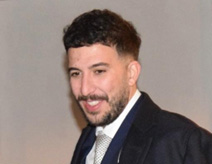
Eng. Giuseppe Salvia, born in Potenza on 11/11/1996, holds a master’s degree in civil engineering with a specialization in Structural and Building Engineering from the University of Basilicata. My thesis focused on seismic engineering, specifically on the Influence of Soil-Structure Interaction on the Seismic Performance of Existing Reinforced Concrete Viaducts.
Registered with the Order of Engineers of the Province of Potenza (Sez. A).
Currently, I am a research fellow at the National Research Council – Institute of Methodologies for Environmental Analysis (CNR – IMAA), working on the project “Development of an Integrated Multiscale Approach for Assessing the Deterioration of Reinforced Concrete Structures (ICARUS).”
Dott. Davide di Gennaro
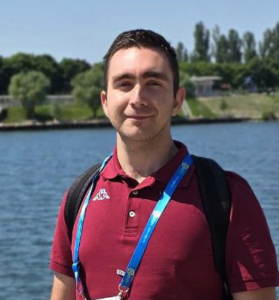
Davide Di Gennaro (Corato, Italy, 1999), bachelor’s degree in geological sciences (Thesis: “Matese 2013-2014 seismic sequence: seismo-electromagnetic signal effects analysis”) and master’s degree in geophysical sciences (Thesis: “Three-dimensional magnetotelluric inversion applied in a sector of the Southern Apennine”) from University of Bari Aldo Moro.
Since June 2024 I’m research fellow at the Institute of Heritage Science (CNR-ISPC) – National Research Council (CNR) working on the project “Development of an Integrated Multiscale Approach for Assessing the Deterioration of Reinforced Concrete Structures (ICARUS).”